Court Records in Fairfax County give residents instant access to case details, filing dates, and official documents, helping you verify a party’s legal history or locate a specific judgment. By using the Fairfax County court record search you can pull up civil disputes, criminal filings, family law matters, probate actions, and juvenile cases all from a single online portal. The system lets you filter by case number, party name, filing date, or court type, so you quickly find the exact record you need without sifting through irrelevant files. Whether you’re checking a landlord‑tenant dispute, confirming a traffic citation, or reviewing a child custody proceeding, the Fairfax County court record database provides reliable information that courts publish for public use. This transparency supports personal research, legal preparation, and peace of mind, while the official Fairfax County court record request process ensures you receive certified copies when required.
Court Records search tools also reveal case status, disposition, and any associated motions, orders, or exhibits, giving a full picture of a case’s lifecycle. With the Fairfax County court case lookup you can explore criminal court records, civil court records, and even sealed or restricted documents where access is permitted. The online Fairfax County public court records platform updates regularly, showing newly filed cases and alerting users to delayed updates or archived files. By entering accurate party names or case numbers, you avoid common pitfalls like “case not found” errors, and the system’s verification steps help confirm you’re viewing the correct record. This reliable, user‑focused service simplifies legal research for attorneys, journalists, and everyday citizens alike.
How to Search Court Records
You can search court records in Fairfax County using the official online portal maintained by the Circuit Court Clerk’s Office. This system gives you direct access to case details, party names, filing dates, and supporting documents from one place. You can also access criminal court records to review official records. You can filter results by case number, party name, filing date, court division, or case type to narrow your search. The portal serves attorneys, researchers, and residents who need verified legal data without visiting the courthouse.
Official Search Portal: https://fairfaxcounty.gov/circuit/online-case-search
Steps to Search
- Open the Fairfax County Circuit Court online case search page in your web browser.
- Select the search method that matches what you know (party name, case number, filing date, court, or case type).
- Enter the requested details in the search fields. Use exact spellings for names and full case numbers when possible.
- Review the results list and click the case that matches your inquiry to view full record details.
- Download or print any documents you need. For certified copies, follow the request process shown on the portal.
Search by Party Name
Party name search lets you look up cases by entering the full legal name of a person or business involved. The system will show all matching cases where that name appears as a plaintiff, defendant, petitioner, or respondent. You can add date ranges or court divisions to narrow the results when names are common. This method works well for background checks, legal research, or verifying someone’s court history in Fairfax County.
Search by Case Number
A case number search is the fastest way to find a specific record when you already have the unique identifier. Fairfax County assigns each case a distinct number based on the year, court type, and sequence. Enter the complete number, including any letters or dashes, into the search field. The system will pull up that exact case, saving you time over browsing through name-based results.
Search by Filing Date
Filing date search helps you locate cases submitted to the court during a particular time period. You can enter a start date, end date, or both to see all cases filed in that window. This option helps journalists, researchers, and residents tracking recent legal activity. It also helps you find related filings in a specific timeframe, such as all civil cases opened in the last month.
Search by Court
Searching by court lets you focus on cases handled by a specific Fairfax County court, such as Circuit Court, General District Court, or Juvenile and Domestic Relations District Court. Each court handles different case types, so this filter helps you target the right division. You can combine the court filter with a name or date search to refine your results further.
Search by Case Type
Case type search sorts results by legal category like civil, criminal, family, probate, or traffic matters. This filter helps when you want to see only one kind of case, such as all felony criminal filings or all divorce cases. It works well with date filters to show recent activity in a specific practice area.
Information Needed for a Court Records Search
Before you begin a search, gather the details you already know about the case. Helpful data points include full legal names of parties, the case number if available, the approximate filing year, and the type of case involved. Having these details ready reduces the number of results and helps you confirm you have the right record. The portal does not require you to know every field; you can search with just one piece of data.
Fairfax County Court Record Details
Each court record in Fairfax County displays a standard set of data fields that describe the case. These fields help you confirm identity, track timelines, and understand the current state of the legal matter. The following sections explain the key details you will see in a typical record.
Case Number
The case number is the unique identifier assigned by the clerk’s office when the case is first filed. It typically includes a year code, a court code, and a sequence number. This number stays with the case from opening to closure and helps you track the matter across all filings.
Party Names
Party names list every individual or organization involved in the case, such as plaintiffs, defendants, petitioners, and respondents. Each name links back to the case so you can see who initiated the action and who is responding. The record shows names exactly as they were entered at filing, so spellings may vary from common usage.
Court and Judge
The court and judge field shows which Fairfax County court handles the case and the judicial officer assigned to oversee it. Knowing the judge helps you check hearing schedules, review rulings, and follow case progress. Some records may list a substitute judge if the original judge recused or rotated off the case.
Filing Date
The filing date marks the day the clerk’s office officially received and opened the case. This date sets legal deadlines for responses, motions, and hearings. You can use it as a reference point when researching case timelines or verifying statute of limitations issues.
Case Type
Case type tells you the legal category of the matter, such as civil lawsuit, criminal charge, divorce, custody dispute, or estate administration. This label helps you understand the nature of the dispute and which rules apply. It also helps you compare similar cases when conducting research.
Case Status
Case status shows where the case stands in the legal process, such as pending, active, continued, or concluded. The status updates as the court takes action on motions, holds hearings, or issues orders. Checking status helps you know if a case is still moving or has reached a final resolution.
Case Disposition
Case disposition shows the outcome of the case, such as guilty, not guilty, dismissed, settled, or judgment for the plaintiff. This field gives you the final result of the legal action. You can use disposition data to verify court outcomes for background checks, appeals, or personal records.
Types of Court Records
Fairfax County courts maintain records for many legal matters, each falling under a specific case category. Understanding these categories helps you find the right records and know which court division to contact. The following list shows the main case types you can search online or request from the clerk.
Criminal Court Records
Criminal court records cover cases where the Commonwealth of Virginia prosecutes an individual for an alleged violation of criminal law. These records include felony charges, misdemeanor cases, and traffic infractions processed through the General District Court or Circuit Court. You can view charges, plea details, trial outcomes, and sentencing orders in these files.
Civil Court Records
Civil court records involve disputes between individuals, businesses, or government entities seeking monetary damages or specific performance. Common civil matters include contract disputes, property conflicts, personal injury claims, and debt collections. These files show complaint filings, answer documents, motions, and final judgments.
Family Court Records
Family court records address domestic relations matters such as divorce, child custody, child support, spousal maintenance, and protective orders. The Juvenile and Domestic Relations District Court handles most family-related filings in Fairfax County. You can review petitions, custody evaluations, support calculations, and final decrees.
Probate Court Records
Probate court records deal with estate administration after a person passes away, including wills, inventories, and distributions to heirs. These records also cover guardianship and conservatorship proceedings for adults who need help managing their affairs. The clerk’s office stores these files for public review unless sealed by court order.
Juvenile Court Records
Juvenile court records cover cases involving minors accused of delinquent acts or children in need of services or supervision. These files include petitions, adjudication orders, disposition plans, and probation reports. Access to juvenile records is restricted to protect the minor’s privacy, with limited exceptions for authorized parties.
Other Court Records
Other court records in Fairfax County include appeals, civil commitment hearings, name changes, and concealed weapon permit applications. These specialized case types follow different procedural rules but remain part of the public record unless sealed. You can search for these matters using the same online portal by selecting the appropriate case type filter.
Documents Found in Court Records
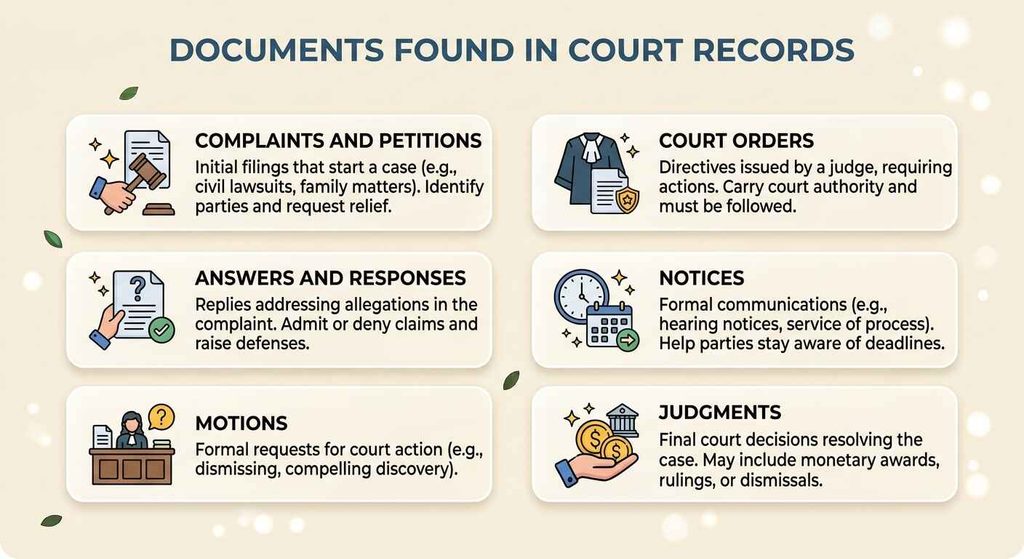
Court records contain a range of documents filed by parties, attorneys, and the court itself. Each document serves a specific legal purpose and shows a step in the case lifecycle. The following list describes the main document types you will find when reviewing a Fairfax County case file.
Complaints and Petitions
Complaints and petitions are the initial filings that start a court case. A complaint begins a civil lawsuit, while a petition opens family, probate, or juvenile matters. These documents state the facts, identify the parties, and list the relief or action requested from the court.
Answers and Responses
Answers and responses are written replies filed by the opposing party to address the allegations in the complaint or petition. These documents admit or deny specific claims and raise defenses or counterclaims. They set the stage for the court’s review of disputed issues.
Motions
Motions are formal requests asking the court to take a specific action, such as dismissing a case, compelling discovery, or extending a deadline. You can also access fairfax county va records to review official records. Parties file motions throughout the case to shape the legal process. The court’s ruling on each motion becomes part of the record.
Court Orders
Court orders are written directives issued by a judge that require parties to take or refrain from certain actions. Orders can address temporary issues like restraining orders or finalize case elements like scheduling. They carry the full authority of the court and must be followed.
Notices
Notices are formal communications filed with the court to inform parties of hearings, motions, or required actions. They include hearing notices, service of process, and notification of filings. Notices help parties stay aware of deadlines and upcoming proceedings.
Judgments
Judgments are final court decisions resolving the case or a specific issue within the case. They may include monetary awards, custody rulings, probation terms, or dismissals. Judgments are recorded in the case file and may be enforced through additional court action if not followed.
Filed Exhibits and Attachments
Filed exhibits and attachments are supporting documents submitted as evidence or reference in motions, hearings, and trials. These can include contracts, photographs, medical records, police reports, and affidavits. Exhibits help the court evaluate the facts and arguments presented by each side.
Court Proceedings and Case Outcomes
Every case follows a series of proceedings that lead to a final outcome. The court record tracks each step so you can follow how the case developed. The sections below explain the main proceedings and the types of outcomes recorded in Fairfax County files.
Hearings and Proceedings
Hearings and proceedings are scheduled court events where the judge reviews motions, hears arguments, or takes testimony. Each hearing produces minutes or notes that become part of the case file. You can see the date, type of hearing, and the judge’s ruling in the record.
Trial Information
Trial information shows whether the case went to a full trial, a bench trial before the judge, or a jury trial. The record notes trial dates, witness lists, exhibits introduced, and verdict details. You can review this data to understand how the court reached its decision.
Settlements
Settlements occur when the parties resolve the dispute without a trial. The court records the settlement agreement and any dismissal order tied to it. Settlement records are useful for confirming that a case has ended and for reviewing the agreed terms.
Dismissals
Dismissals happen when the court ends a case before final judgment, often due to procedural issues, lack of prosecution, or voluntary withdrawal. The record shows whether the dismissal was with or without prejudice, which affects whether the case can be refiled.
Judgments and Final Dispositions
Judgments and final dispositions are the court’s official rulings that close the case. They show the winning party, the relief granted, and any penalties or awards. Final dispositions mark the end of the court’s active involvement unless post-judgment motions or appeals follow.
Case Closure
Case closure confirms the court has finished active work on the matter and the file is now in archived status. Closed cases remain accessible for review and certified copy requests, but no new hearings or filings occur unless reopened by court order. The closure date is recorded in the case history.
Fairfax County Court Records Public Access
Virginia law makes most court records open to the public to support transparency in the justice system. Fairfax County provides several ways to access these records based on your needs and the sensitivity of the case. The following sections explain how public access works and what limits apply.
Public Case Information
Public case information covers basic details like case number, party names, filing date, court division, and case status. Anyone can view this data through the online portal or by visiting the clerk’s office. This access supports background checks, legal research, journalism, and personal inquiries.
Online Court Records
Online court records give you 24-hour access to case data from any device with internet access. The portal updates regularly to show new filings, scheduled hearings, and recent rulings. Online access reduces the need to visit the courthouse for basic lookups.
Public Documents
Public documents include filings, orders, and judgments that are not sealed by the court. You can view or request copies of these items through the portal, the clerk’s office, or by mail. Some documents may require a small copy fee depending on the format and page count.
Restricted Information
Restricted information covers data removed from public view to protect privacy, safety, or judicial integrity. Examples include Social Security numbers, financial account details, and the identities of certain victims. The clerk’s office redacts this data before releasing records to the public.
Sealed Records
Sealed records are court files closed to public access by a judge’s order. These cases often involve sensitive matters like adoptions, juvenile proceedings, or trade secrets. You cannot view sealed records unless you are a party to the case or the court grants a specific request to unseal them.
Juvenile Record Restrictions
Juvenile record restrictions limit access to cases involving minors to protect their privacy and future opportunities. Only the minor, parents, guardians, attorneys, and authorized agencies can review the full file. Some juvenile records may be expunged or destroyed after the individual reaches adulthood.
Records Available by Request
Records available by request include items not shown on the public portal, such as archived files, older case documents, or certified copies. You can submit a request to the clerk’s office online, by mail, or in person. Processing time varies based on the record type and request volume.
Obtaining Official Court Records
When you need an official copy of a court record for legal, business, or personal use, you can request it through several channels. Each method has its own process, fees, and processing time. The following sections explain how to obtain certified and uncertified copies of Fairfax County court records.
Online Requests
Online requests let you order copies of case documents through the Fairfax County Circuit Court website. You select the case, choose the documents you need, and pay the copy fee using a credit or debit card. The system emails you when the copies are ready for download or mail delivery.
Court Clerk Requests
Court clerk requests involve contacting the clerk’s office directly by phone or email to order specific documents. Staff can help you identify the right case and confirm the documents you need. This method works well for older records or files that are not fully indexed online.
In-Person Requests
In-person requests let you visit the clerk’s office and review files with staff assistance. You can view original documents, request copies on the spot, and ask questions about the record. The clerk’s office accepts cash, check, or card payments for copy fees.
Certified Copies
Certified copies carry an official court seal and signature verifying that the document is a true copy of the original. You can also access civil court records to review official records. Courts, government agencies, and private entities often require certified copies for legal proceedings. You can request certified copies through any of the access methods above.
Copy Fees
Copy fees in Fairfax County follow the rates set by Virginia state law and local court rules. Standard copies typically cost a set fee per page, while certified copies carry an additional certification charge. The clerk’s office posts the current fee schedule on its website and at the public service window.
Processing Times
Processing times depend on the request method, document type, and current clerk’s office workload. Online requests for available documents often complete within a few business days. Requests for archived records or large document sets may take longer, and the clerk’s office will give you an estimated completion date.
Court Record Accuracy and Availability
Court records are maintained as official government records, but updates and availability can vary based on case status, filing volume, and system updates. Knowing how the system works helps you get accurate results and avoid confusion. The following sections explain how to verify and access the right records.
Verifying the Correct Case
Verifying the correct case means checking all identifying details like case number, party names, and filing date before drawing conclusions. Cross-reference the data with any documents you already have to confirm the match. This step prevents errors when names are similar or cases share common parties.
Matching Party Names
Matching party names requires entering the full legal name as it appears on the case filing. Variations in spelling, middle names, or business entity types can affect your results. Try different name formats if your first search returns no matches.
Confirming Case Numbers
Confirming case numbers ensures you have the right identifier for the right court and year. Fairfax County case numbers include codes that point to a specific division. Double-check the number against any paperwork or notices you received to avoid looking up the wrong case.
Recently Filed Cases
Recently filed cases may take a short time to appear in the online portal as the clerk indexes new submissions. If you filed or were served recently, wait a few business days before searching. The clerk’s office can confirm whether a new case has been entered into the system.
Delayed Record Updates
Delayed record updates can occur when courts process large filing volumes or update system databases. Some entries, like judgments or dismissals, may post a few days after the court action. Check back if a recent event does not yet appear in the record.
Missing Documents
Missing documents may be temporarily unavailable in the online portal but still exist in the physical file. The clerk’s office can retrieve these documents on request. Common reasons for missing online documents include scanning backlogs or redactions for restricted data.
Archived Records
Archived records are older case files stored offsite or in long-term digital storage. These records remain accessible but may require additional processing time to retrieve. The clerk’s office handles archived record requests through its records unit.
Search Problems
Even with a well-organized online portal, users sometimes run into issues when searching for court records. Most problems have simple fixes once you know what to look for. The following sections cover the most common search issues and how to resolve them.
Case Not Found
A “case not found” result usually means the search criteria do not match any record in the system. Check your spelling, try a different name format, or remove optional filters to broaden the search. If the case is very old, it may be in archived storage and not visible in the standard online search.
Incorrect Party Name
An incorrect party name search happens when the name entered does not match the official record. Try variations like first initial with last name, full middle name, or business entity name. Avoid using nicknames or shortened versions of the name.
Incorrect Case Number
An incorrect case number entry will lead to zero results or the wrong case. Verify each character, including any letters or dashes, against your source document. Contact the clerk’s office if you are missing part of the case number.
Wrong Court or Jurisdiction
Searching the wrong court or jurisdiction happens when the case is handled by a different court division than expected. Fairfax County has separate systems for Circuit Court, General District Court, and Juvenile and Domestic Relations District Court. Confirm the right court before searching.
Missing Documents
Missing documents may result from redactions, pending filings, or processing delays. If a document you need is not online, contact the clerk’s office to request a copy from the physical file. Some documents may be restricted based on case type or court order.
Restricted or Sealed Records
Restricted or sealed records are not viewable through public search tools. You must be an authorized party or obtain a court order to access them. The clerk’s office can confirm whether a record is sealed and explain the steps to seek access.
Outdated Case Information
Outdated case information can appear if the system has not yet updated with the latest filings or rulings. Refresh the record or check back after a short period. For time-sensitive matters, contact the clerk’s office to confirm the most recent status.
Contact Information
For direct help with Fairfax County court records, certified copies, or search questions, contact the Circuit Court Clerk’s Office using the details below. Staff can guide you through the search process, confirm record availability, and process your copy requests.
- Address: 4110 Chain Bridge Road, Fairfax, VA 22030
- Phone: (703) 691-7320 / (703) 246-2228
- Office Hours: Mon-Fri: 8:00 AM – 4:30 PM
- Official Search Portal: https://fairfaxcounty.gov/circuit/online-case-search
Frequently Asked Questions
Below are common questions about accessing Fairfax County court records and how to obtain the information you need.
How can I search Fairfax County court records online?
Visit the official portal at https://fairfaxcounty.gov/circuit/online-case-search. Enter a case number, party name, or filing date in the search box. Use the filter options to narrow results by division or case type. After submitting, the system displays a list of matching cases with basic details and links to available documents. The site is open to the public and does not require a login for basic searches.
What info is shown in a Fairfax court case record?
A Fairfax court case record lists the case number, names of all parties, filing date, and the court division handling the matter. It also shows the case type, current status, and any orders or judgments entered. When documents are attached, you can view or download filings such as motions, notices, and exhibits. The record keeps a chronological history of each action taken in the case.
Can I find court records by party name in Fairfax?
Yes. In the online search portal, select the “Party Name” field and type the full or partial name of the individual or organization. The system returns all cases that include that name as a plaintiff, defendant, or other participant. Results can be further refined by adding a date range or case type. Note that records may be limited if the case is sealed or restricted.
How do I request a certified copy of a Fairfax record?
Contact the Circuit Court Clerk’s Office at 4110 Chain Bridge Road or call (703) 691-7320. Complete the certified copy request form, providing the case number and the specific document you need. Pay the required fee, which varies by document type. The clerk will process the request and mail the certified copy, typically within a few business days. You can also submit the request in person during office hours.
Why might a Fairfax court record not appear in search?
A record may be missing if the case is sealed, under a privacy order, or still in the early filing stage before the system updates. Errors in the entered case number or party name can also prevent a match. Occasionally, records belong to a different jurisdiction or have been archived and are not yet digitized. If you suspect an error, verify the details with the clerk’s office.